2026
Conceived in situ, the exhibition was rooted in the agricultural landscape of Essonne and its material resources. Hemp cultivated at 91530 Le Marais became the starting point for an investigation into the relationships between artisanal gestures, material memory and ecology. The project extended research initiated during Hazard’s residency in Tambacounda, Senegal, with the Josef & Anni Albers Foundation. There, she built her own loom and incorporated discarded bicycle inner tubes, materials locally used to repair and assemble everyday objects, into her woven compositions.
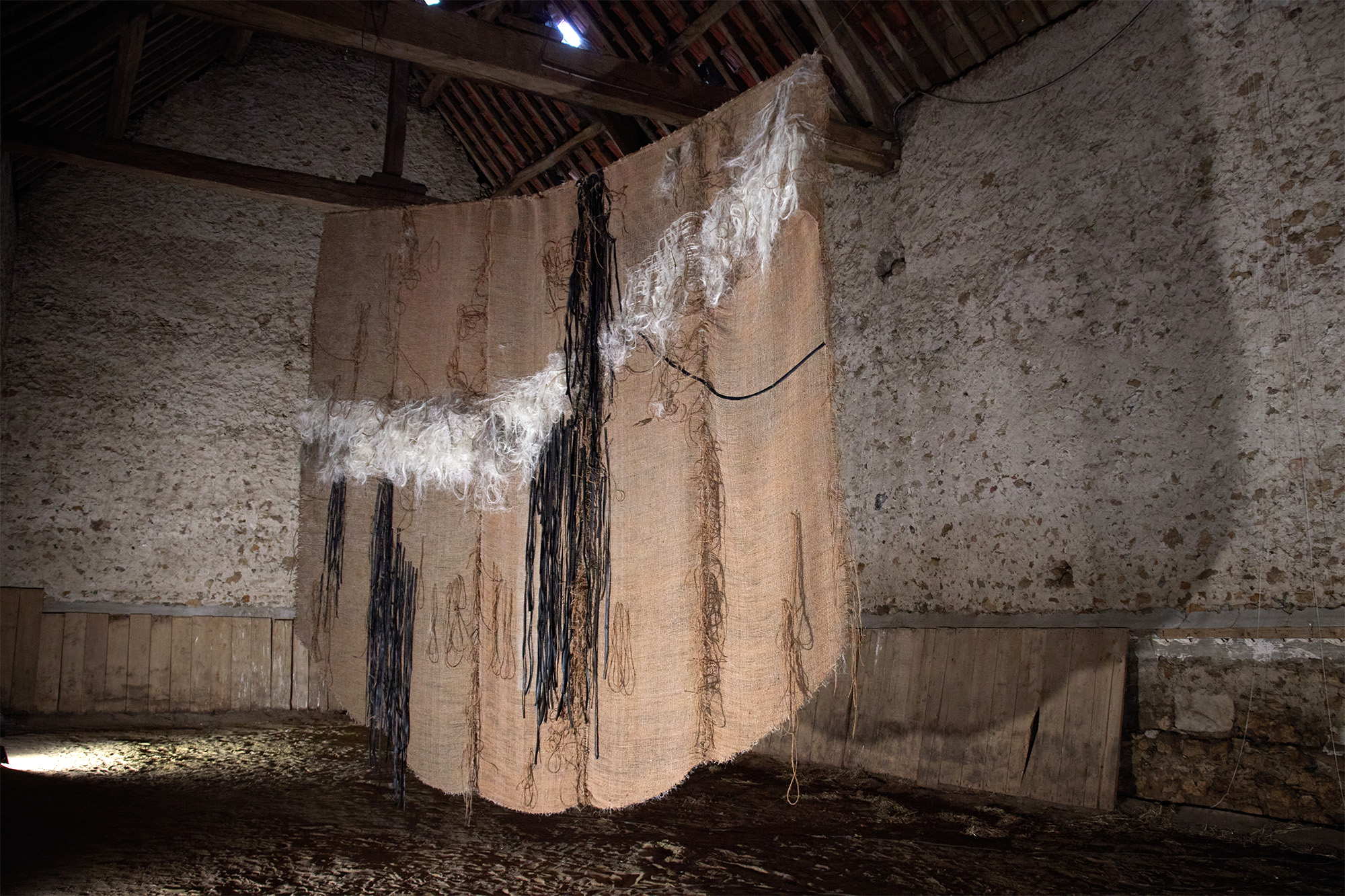
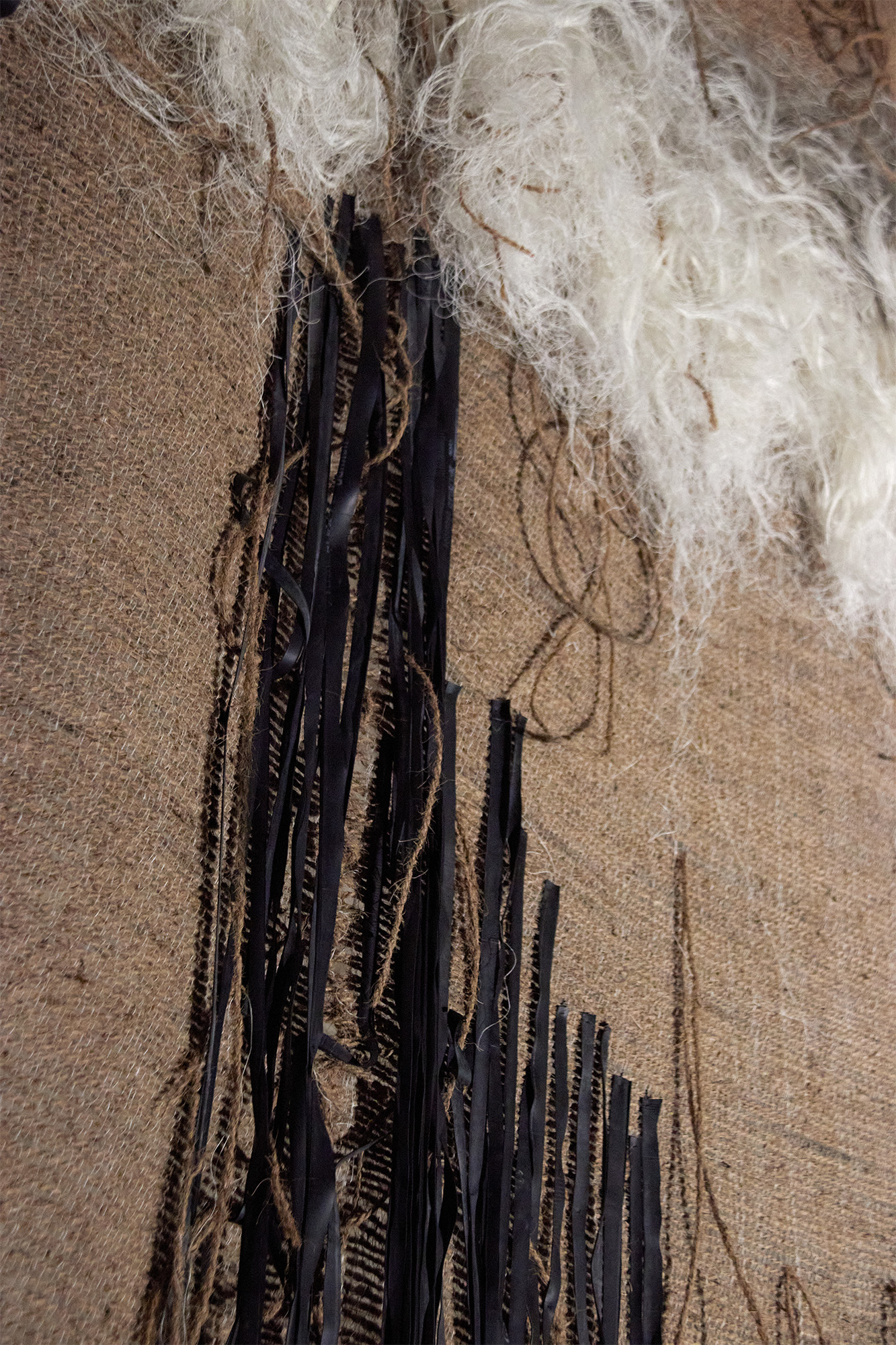
At Le Marais, these rubber elements were brought into dialogue with hemp, linen and coconut fibre, creating encounters between materials with different histories, uses and statuses. Their respective identities began to shift: rubber was elevated through its association with natural fibres, while transferring its roughness, weight and physical presence to them. This exchange reflects Hazard’s approach to textiles as an unstable medium, one that transforms through contact with materials and processes beyond its traditional boundaries.
The exceptional volume of the seventeenth-century barn allowed Hazard to produce a monumental woven work, exploring a scale she had not previously approached within such an architectural setting. Combining coconut fibre, linen and discarded inner tubes, the work foregrounds the physical presence of weaving while extending her ongoing investigation into assemblage and the reappropriation of materials, in dialogue with the legacy of Robert Rauschenberg.
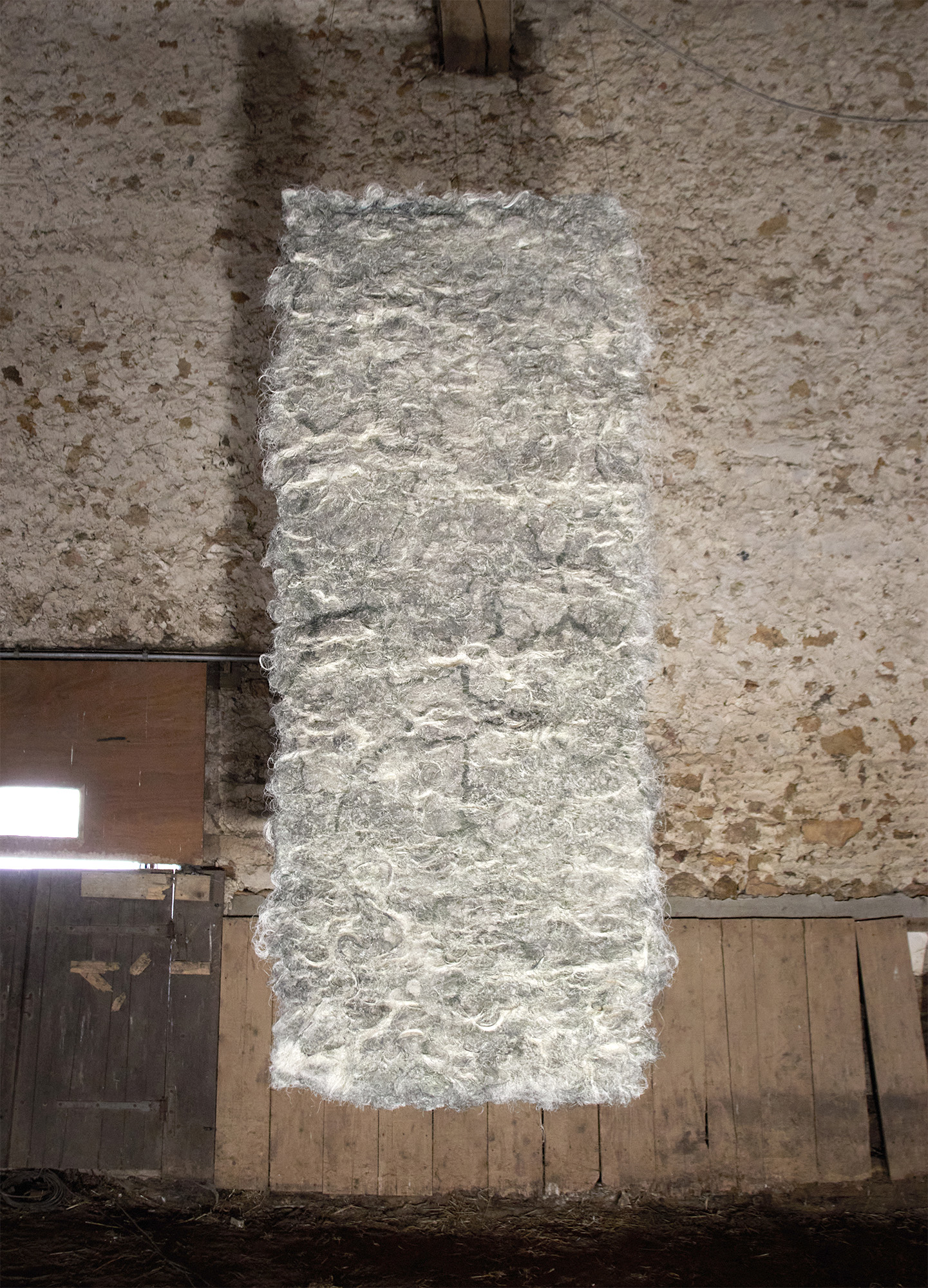
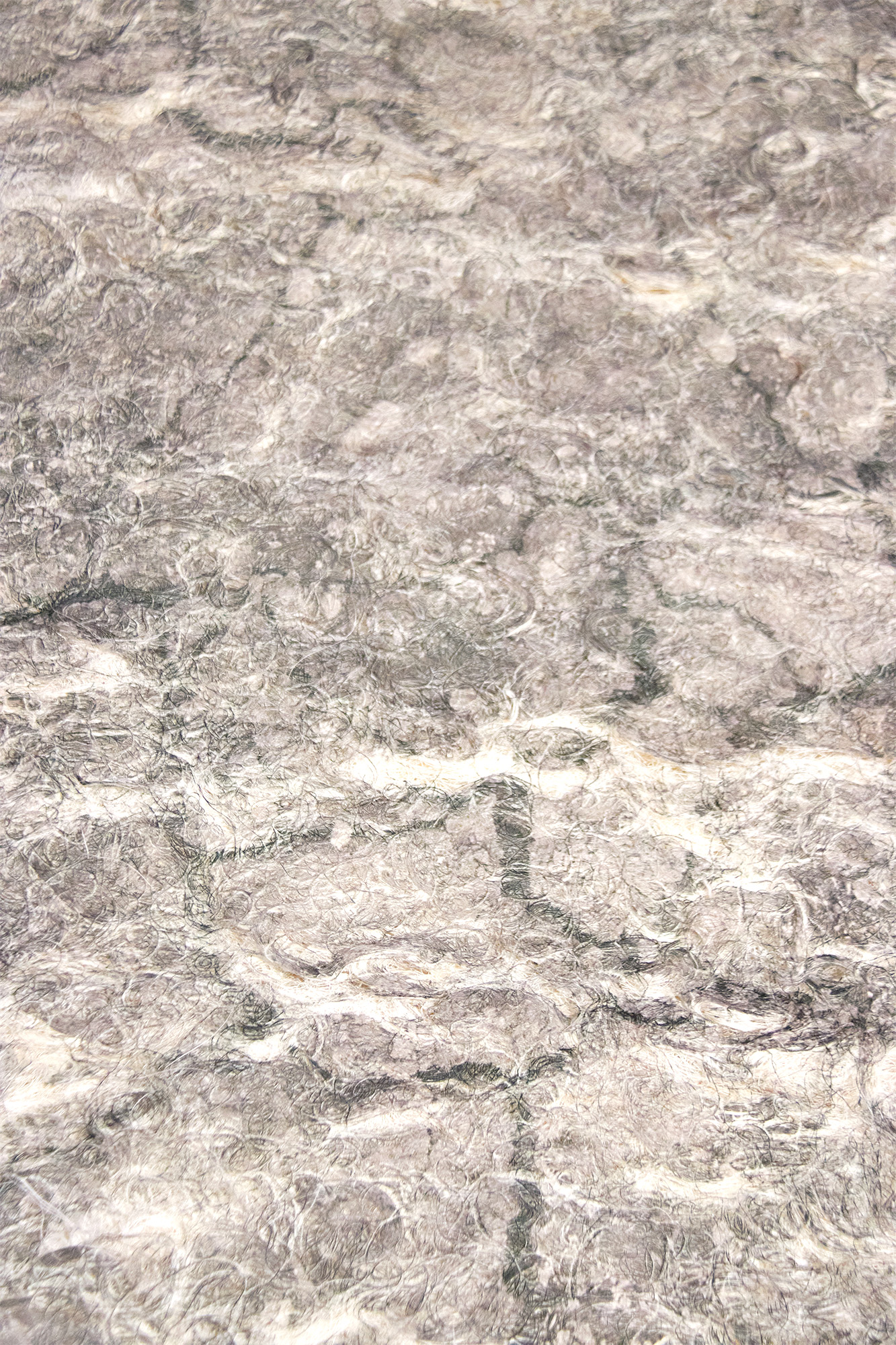
Another series of works emerged from linen offcuts sourced from a major textile factory in northern France, now closed. Passed on to the artist by a collector, these fragments were assembled directly on the loom. Retaining traces of their industrial origins, the materials were transformed in both function and scale. Initially resembling dense woollen surfaces, the compressed threads become supports for digitally printed images. The photographs incorporated into the works were taken in the quarry at Le Marais, near the hemp fields, establishing a direct connection between the exhibition’s materials, landscape and site.
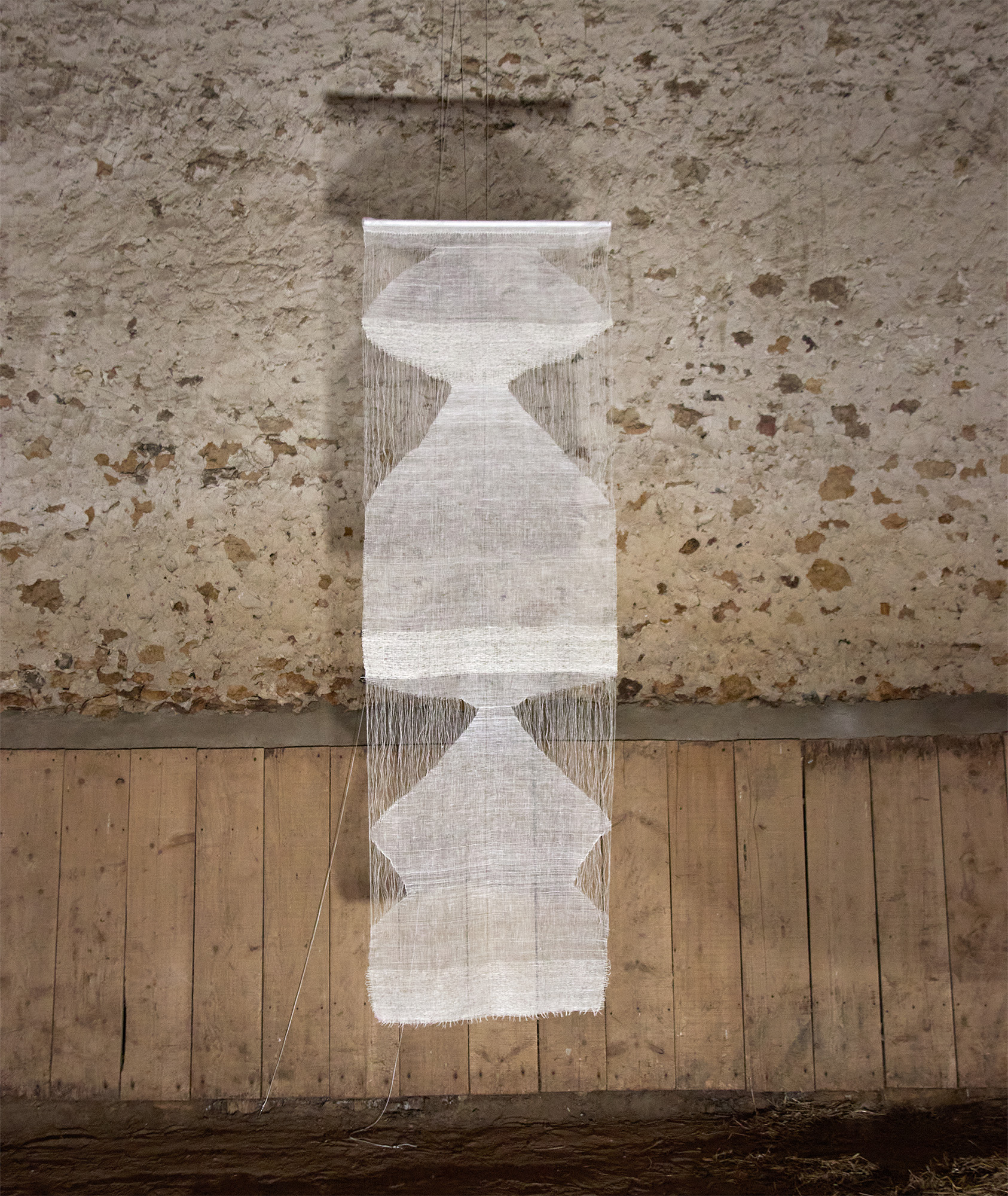
A weaving combining hemp and paper extended research previously presented in Mexico City and at the Espace de l’Art Concret. Another series explored transparency and superimposition, with printed motifs appearing recessed within the weave, allowing the eye to move through the material. Lighter and more porous, these works suggest passages and thresholds rather than defining enclosed spaces, moving between image, textile and architecture.
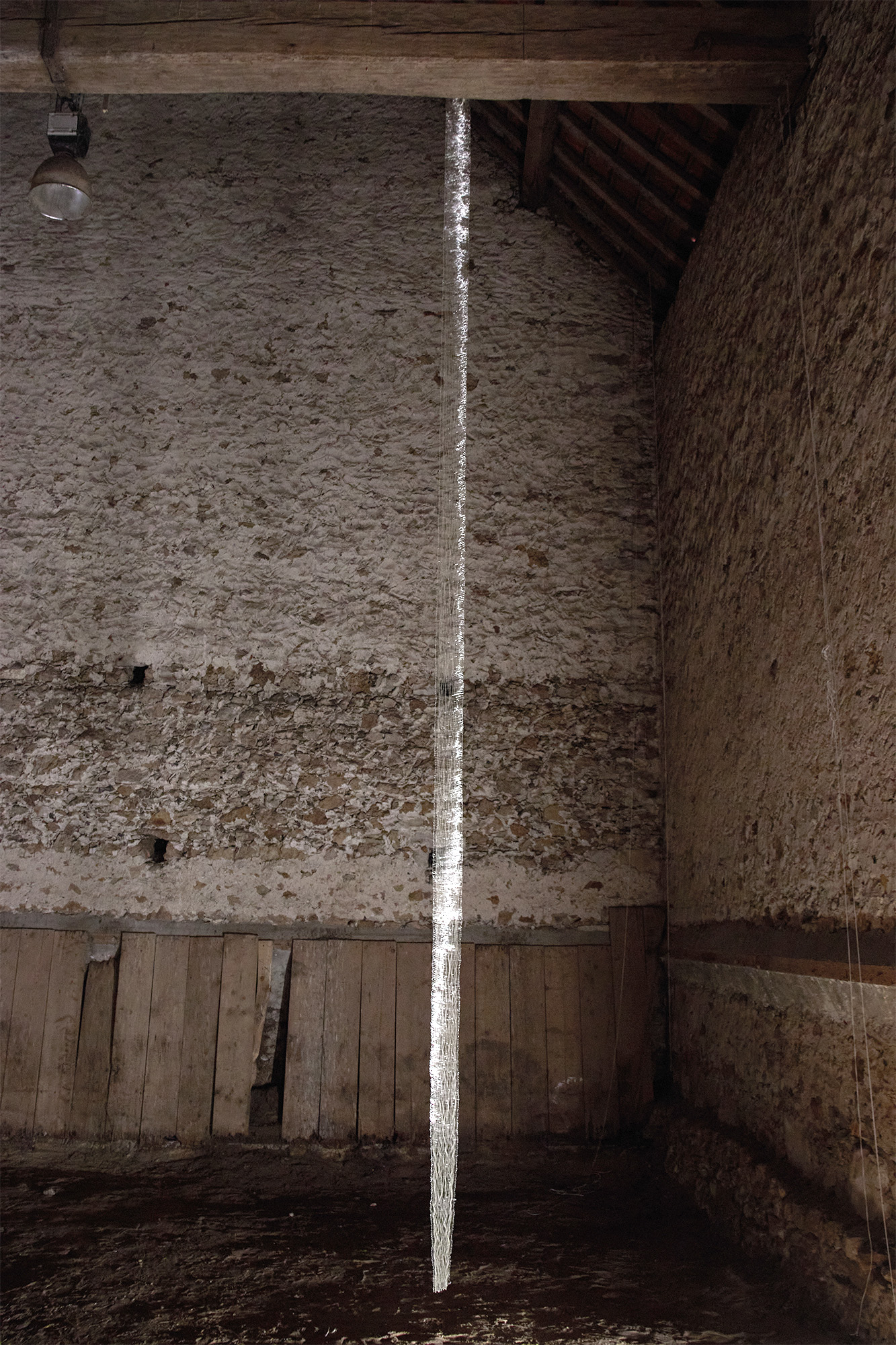
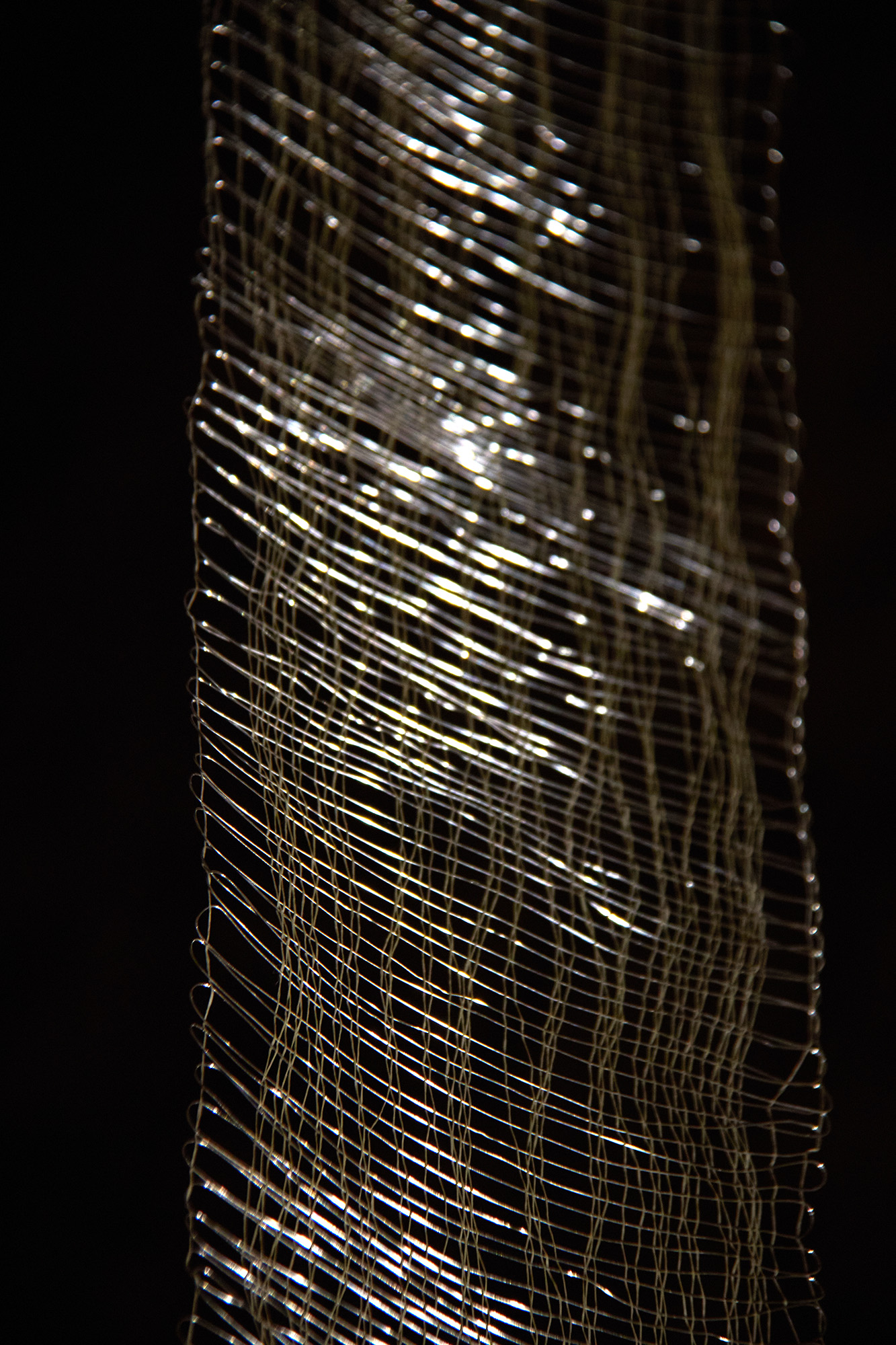
A seven-metre-high woven work in silver thread unfolded vertically within the barn. Its slender structure followed the architectural lines of the building, while its reflective surface revealed and altered the perception of its volumes. Changing according to the viewer’s position, the work entered into a continuous dialogue with the architecture, contrasting with the density of the rubber-based weaving positioned opposite it.
The exhibition also extended a conversation between Marie Hazard and Neville Wakefield on the status of textiles within contemporary art. As Wakefield observed, Hazard’s work questions what happens when weaving “refuses to be contained”, both materially and conceptually. The artist, in turn, describes textile as a “matrix”: a structure through which matter, space, light and perception can be articulated.
“How can craft be subverted from within? How can it be pushed beyond itself without losing what defines it?” This question runs throughout the works presented at Le Marais. Starting from gestures and materials deeply rooted in the history of textiles, Hazard seeks to displace their established functions and possibilities. Hemp, linen and coconut fibre encounter rubber, photographic imagery and industrial processes, transforming weaving from a fixed object into a space of relationships.